 ← PostgreSQL Blog
The Journey of SELECT 1
The Journey of SELECT 1
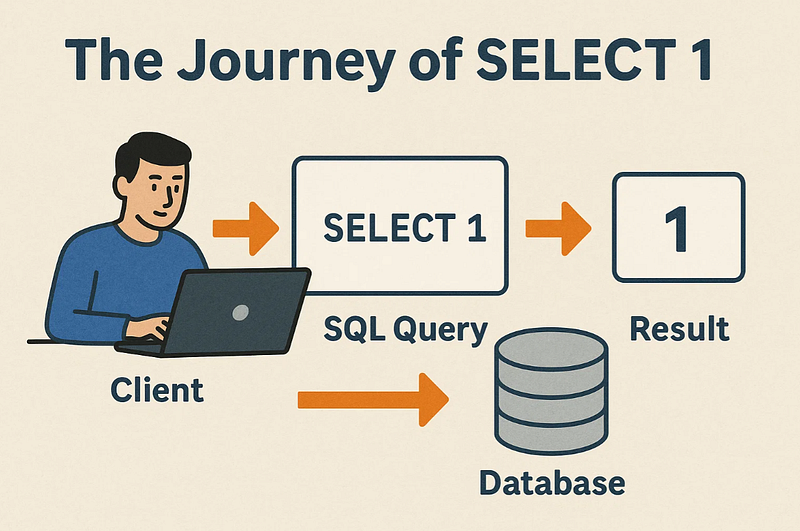
The phrase “Even a simple SELECT 1; tells a lot" marks a milestone for anyone beginning to explore the inner workings of a powerful database engine like PostgreSQL. Beneath this tiny query lies a vast system of processes and components. In this journey, we won’t just follow SELECT 1;, but also pause to ask deeper questions: What if it were an INSERT? What happens during a massive JOIN? How does synchronous replication affect response time?
TCP Handshake & TLS Negotiation
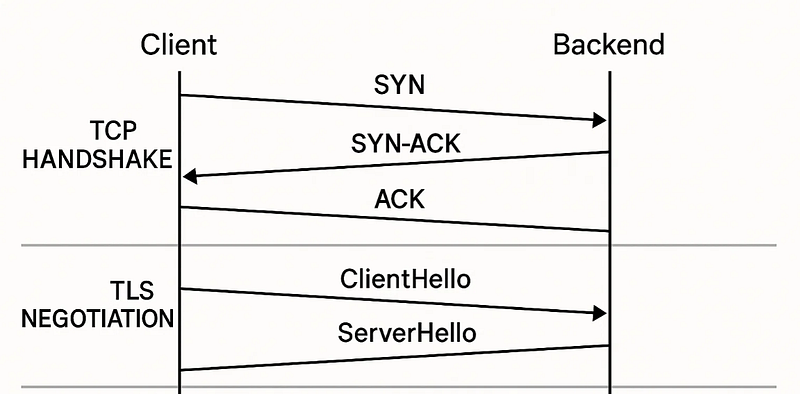
When a client (like psql, JDBC, or your app) connects to PostgreSQL, the first thing that happens isn’t SQL it’s networking.
TCP 3-Way Handshake
SYN → SYN-ACK → ACKThe PostgreSQL server, via the postmaster process, listens on the configured listen_addresses and port. Upon receiving a connection request, it calls accept() and forks a dedicated backend process for the session.
PostgreSQL uses a process-per-connection model. This ensures strong isolation (Unix philosophy!), but can be resource-intensive. For high concurrency, connection poolers like PgBouncer are recommended.
TLS Handshake (If Enabled)
If ssl = on, a TLS handshake follows the TCP negotiation:
- Certificates are exchanged,
- A session key is negotiated,
- Communication becomes encrypted.
Key TLS parameters in postgresql.conf:
ssl = on
ssl_cert_file = 'server.crt'
ssl_key_file = 'server.key'
ssl_ca_file = 'root.crt'
Encrypted traffic ensures data integrity and privacy over insecure networks.
Authentication via pg_hba.conf & SCRAM-SHA-256
Once the network layer is done, PostgreSQL uses pg_hba.conf to authorize access based on:
- Connection type (
host,hostssl, etc.) - Client IP
- Username
- Database
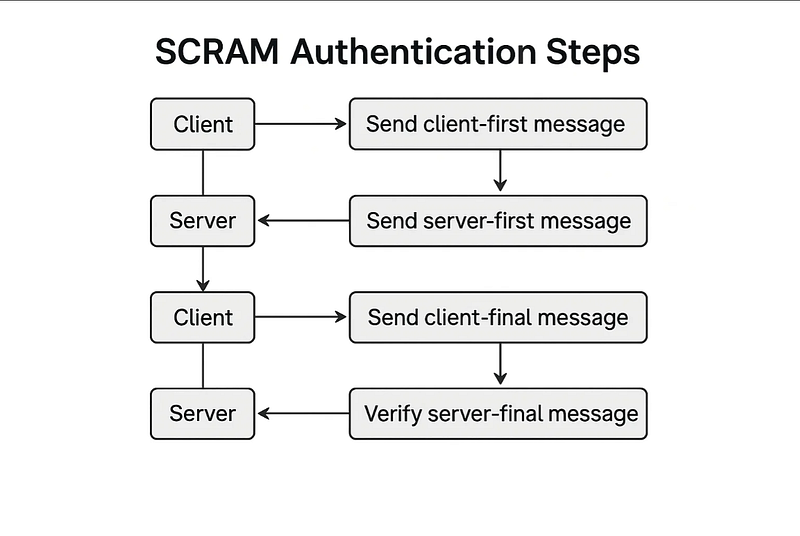
Modern Auth: SCRAM-SHA-256
Today’s PostgreSQL (default since 13+) recommends SCRAM-SHA-256, a challenge-response authentication:
- Server sends a
nonce(random salt), - Client computes a hash from password + nonce,
- Server validates using a stored verifier in
pg_authid.
No password is ever sent in cleartext — anywhere.
Backend Process: Forked and Ready
Every client connection gets its own backend process:
ps aux | grep postgresThis process:
- Parses and executes SQL commands,
- Manages memory for that session,
- Remains alive until the client disconnects.
While SELECT 1; seems trivial, a full-fledged backend is created just the same.
High connection counts = high process counts. Poolers reduce this pressure dramatically.
SQL Lifecycle: From Text to Execution
Let’s see what happens when our backend receives SELECT 1;.
Parse
- SQL is tokenized into a Parse Tree,
- Nodes like
SelectStmt,ResTarget,Constare created.
Rewrite (No-op for SELECT 1;)
- Only used if views or rewrite rules are involved.
Analyze & Binding
- Variables and types are resolved,
- Object names are bound to internal OIDs.
Planner / Optimizer
- PostgreSQL consults internal statistics,
- Chooses the cheapest plan (cost-based),
- For
SELECT 1;, this results in a constant scan.
Advanced Scenarios
JOIN with Sorting
SELECT * FROM logs WHERE user_id = 42 ORDER BY created_at DESC;- Planner uses
pg_statsto assess cardinality, - Uses indexes if available,
- Sorts in-memory using
work_mem, - If memory is insufficient → writes to
pg_temp.
Performance Tip: work_mem
SET work_mem = '64MB';If work_mem is too small, PostgreSQL performs external merge sorts (visible in EXPLAIN ANALYZE):
Sort Method: external merge Disk: 12345kBwork_mem size vs. sort performance.
Executor: Memory vs. Disk
For SELECT 1;:
- The result (
ConstExpr) lives in RAM, - No access to
shared_buffersor disk is needed.
For Actual Data Access
SELECT * FROM products WHERE price > 1000;- If the page is in
shared_buffers→ served from memory, - Else → OS page cache → disk read.
For INSERT, UPDATE, DELETE:
- Tuple written to
shared_buffers, - WAL entry written to
wal_buffers, - Periodically flushed to disk (WAL segment).
INSERT Path: WAL, LSN, and fsync
INSERT INTO audit_log (user_id, action) VALUES (42, 'login');Write-Ahead Logging (WAL):
- Ensures durability,
- Inserted row →
shared_buffers, - WAL record →
wal_buffers→ disk.
If synchronous_commit = off:
- Client may get ACK before data is on disk.
If fsync = off:
- Even WAL is not guaranteed to be flushed. Risky for prod
Replication & Synchronous Commit
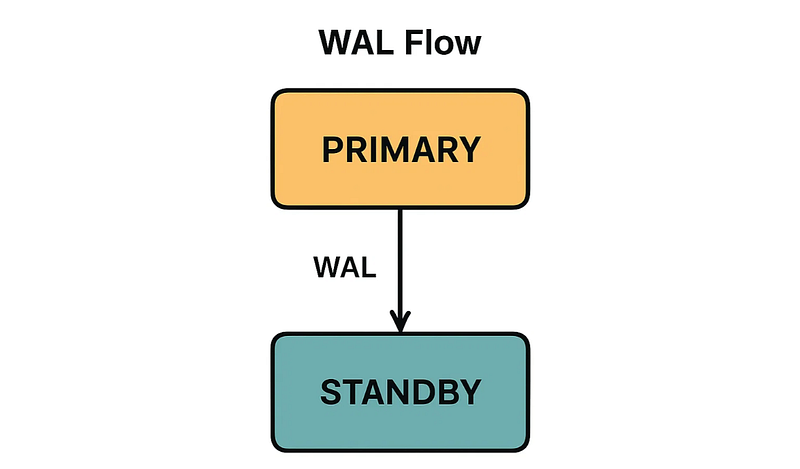
If synchronous_standby_names is set:
- WAL is streamed to standby,
- Standby sends ack after fsync,
- Only then does the client get response.
Pros:
- Strong data durability
Cons:
- Latency increases depending on standby’s I/O and network speed
MVCC: What Does SELECT See?
PostgreSQL uses Multi-Version Concurrency Control (MVCC):
- Every row has
xminandxmaxtransaction IDs, - SELECT queries only see rows visible to their snapshot,
- Uncommitted rows are invisible.
BEGIN;
UPDATE accounts SET balance = balance - 100 WHERE id = 1;
-- This change is not yet visible to others
MVCC ensures consistency without locking reads.
Response and Idle Session
After execution, the backend sends:
RowDescriptionDataRow→1CommandComplete
The session enters idle:
- Keeps GUCs (
search_path,statement_timeout, etc.), - Can be reused (via pooling),
- Consumes memory until terminated.
TL;DR — It’s Never Just SELECT 1;
A single SQL query traverses:
- Network stack (TCP/TLS),
- Authentication (pg_hba, SCRAM),
- Process management (forked backends),
- Planning & Optimization,
- Memory & Disk management,
- WAL and Replication,
- MVCC and visibility,
- Client communication.
Behind every trivial query lies an epic tale of database engineering.