 ← PostgreSQL Blog
The Devrim Cars
The Devrim Cars
About that cold Ankara morning where much more than the gasoline in the tank ran out for that miraculous automobile that could change a nation’s destiny.
October 29, 1961
Every drop of sweat falling on the concrete floor of the Eskişehir Railway Factory was perhaps watering the most audacious dream of Republican history that summer. History books usually only write the result: It was left on the road. But they do not write how that road was taken, or the trembling of the hands under that black hood.
Everything started with President Cemal Gürsel’s impossible order. It will be ready for Republic Day, was said. They had only 129 days. The process that the world’s giant automobile brands said takes years had turned into a matter of honor for a handful of crazy Turkish engineers in Eskişehir.
The inside of the workshop smelled of welding smoke and sleeplessness. 23 engineers… Leaving behind their homes, their spouses, and their children, they imprisoned their lives within the walls of that factory. There was neither a mold press nor a proper chassis bench in the middle. Devrim’s hood, with those soft lines, was shaped not by machines, but by the hammers in the hands of masters, millimeter by millimeter. Metal was being bent by human will.
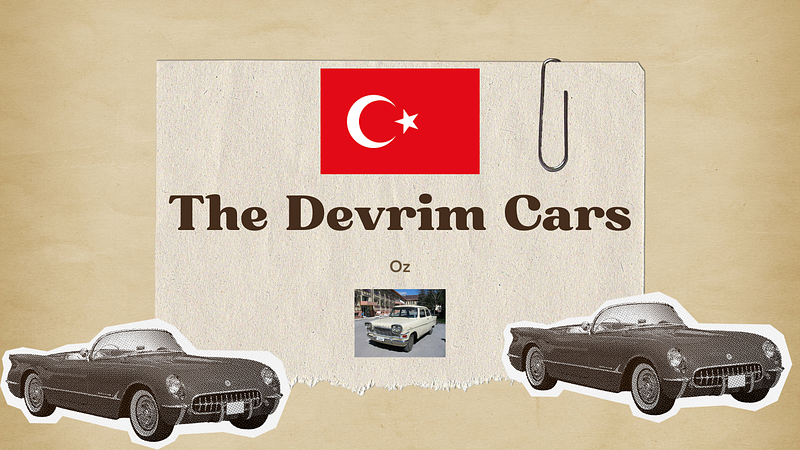
Nights blended into days. No one dared to say this is impossible, because that stubborn glint in the eyes was beyond logic. The excitement felt while the engine block was being cast, the screams of joy thrown when the pistons moved for the first time… This wasn’t just a car; this was a sledgehammer-like answer brought down on the Turks can’t do it prejudice.
And that day finally arrived.
On the morning of October 29, when the train wagon doors opened at the Ankara station, Devrim descended from among the fog. Two were produced; one black, one beige. In front of the Parliament, the President got into the black one. The crowd held its breath. When the engine’s throaty, strong sound was heard, that 129-day hellish torment left its place to an indescribable pride. The car moved, gliding.
However, destiny sometimes hides its greatest tragedies in the smallest details.
The gasoline tanks emptied while being loaded onto the train in a hurry for security reasons… And in that chaos, in that excitement, that unfortunate moment of forgetting to put gasoline in the tank among that enormous crowd.
The car could only go 100 meters. The engine coughed, trembled, and went silent.
What was silenced at that moment was not just an engine. At that moment, the hearts of the masters swinging hammers in that workshop in Eskişehir stopped. At that moment, a country’s confidence in itself hit the brakes. Cemal Pasha’s bitter words were engraved in the headlines: We made a car with a Western mind, but we forgot to put gasoline with an Eastern mind.
The next day, newspapers made headlines not of that engineering wonder created from scratch in 4.5 months, but only of the gasoline that ran out. No one mentioned how quietly the engine ran, the success of the suspension, or its completely domestic design. A dream was buried in a gasoline tank.
Today in Eskişehir, Devrim stands silently inside a glass garage. Its tires press on the ground, but its soul remains suspended on that 100-meter road in front of the Parliament on that morning of 1961. Every time you look at it, you don’t just see a pile of metal. If you look carefully, you can still see the fingerprints of those 23 engineers and the sorrow of an unfinished revolution on that hood.
Perhaps Devrim wasn’t left on the road; we stopped pushing it too early.