 ← PostgreSQL Blog
The Software Developer and SysAdmin in the Age of AI
The Software Developer and SysAdmin in the Age of AI
The blinking cursor on a blank IDE, hours spent scouring Stack Overflow for an obscure bug, and those 3 AM adrenaline-fueled SSH sessions to revive a crashed production server. If you are a software developer, systems administrator, or DevOps engineer, these scenarios are written into your DNA. We have built our careers on being the translators between human needs and machine logic.
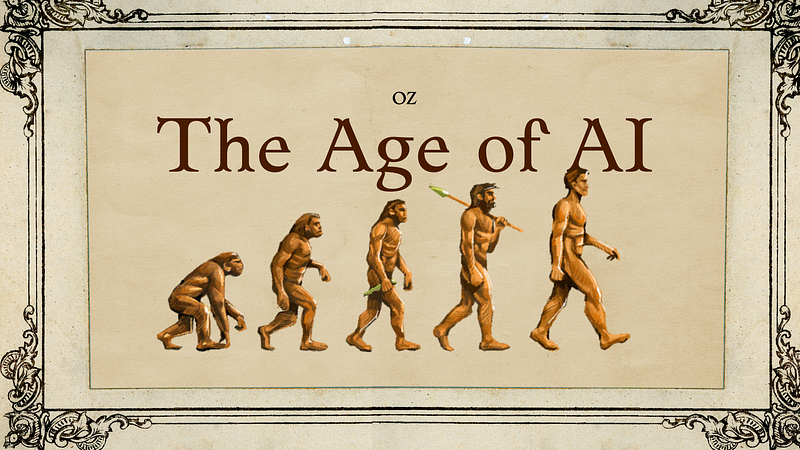
But over the last couple of years, the rules of the game have fundamentally changed.
Today, we have tireless co-pilots sitting next to us. Artificial Intelligence can scan millions of lines of code in seconds, bootstrap complex application architectures, and write those notoriously tedious Kubernetes YAML files before we even finish typing the prompt.
In an era where tools like GitHub Copilot, Cursor, and ChatGPT can write functional code and analyze server logs to pinpoint failures, a lingering question haunts our daily stand-ups: What happens to us? Are we coding ourselves out of a job, or are we standing on the precipice of a golden age for engineering?
Let’s take a deep, realistic dive into what it means to be an IT professional in the age of AI.
Software Developers: From Syntax Typists to Systems Architects
Historically, part of what made a good developer was rote memorization — knowing the exact syntax of a language, remembering the standard library functions, and being able to churn out boilerplate code quickly.
Today, if you ask an LLM, Create a boilerplate for a React and Node.js application with JWT authentication, a PostgreSQL database connection, and Dockerize it, you will have a working prototype in about 30 seconds. If your sole value proposition to your employer is acting as a human keyboard that turns Jira tickets into syntax, yes, AI is a legitimate threat to your job security.
But software engineering has never really been just about typing code.
In the age of AI, the primary role of a developer is no longer writing code; it is directing, designing, and validating solutions.
Here is what the successful AI-era developer looks like:
- Masters of System Design: An AI can write a brilliant Python function, but it cannot decide whether that function should live in a monolithic backend or be decoupled into a serverless AWS Lambda function. Designing resilient, scalable architectures remains a deeply human task.
- Domain Knowledge and Translating Humans: Clients and product managers rarely know exactly what they want. They speak in vague desires (make it pop, make it faster). The human developer’s job is to extract the actual business logic from messy human conversations and feed those precise constraints to the AI.
- The Ultimate Code Reviewer: AI models are incredibly confident, even when they are completely wrong (hallucinations). They can introduce subtle security vulnerabilities or write code that works in isolation but destroys database performance at scale. The developer’s new day-to-day involves reviewing AI-generated code with the critical eye of a Senior Engineer.
SysAdmins and DevOps: The Rise of AIOps and Predictive Engineering
For Systems Administrators and DevOps engineers, the push toward automation isn’t new. We have spent the last decade moving away from racking physical servers to adopting Infrastructure as Code (IaC) with tools like Terraform and Ansible. AI is simply pushing this evolution to its logical extreme: AIOps (Artificial Intelligence for IT Operations).
Remember the days of waking up to a PagerDuty alert, logging into a server, and grep-ing through massive log files to figure out why the system crashed? Those days are numbered.
Modern AI-driven observability tools don’t just tell you that CPU usage is at 100%. They tell you: Database query X, introduced in the deployment 14 minutes ago, is causing a bottleneck. I have isolated the microservice and spun up two additional pods to handle the load. Would you like me to rollback the deployment?
How the SysAdmin/DevOps role is evolving:
- From Firefighting to Fire Prevention: Instead of reacting to outages, SysAdmins will use AI predictive analytics to foresee hardware failures, capacity limits, and network bottlenecks weeks before they happen.
- SecOps (Security Operations): Cyber attacks are increasingly automated and powered by AI. Defending against them requires AI. SysAdmins will focus heavily on training local AI models to recognize anomalies in network traffic and automate lockdown procedures.
- Managing the AI Infrastructure: Someone has to host, manage, fine-tune, and monitor the internal AI models that companies are deploying. GPU provisioning, vector database management, and LLM pipeline optimization are becoming core DevOps responsibilities.
The Productivity Paradox
There is a hidden catch to all this efficiency. Because AI allows us to write code and deploy infrastructure 10x faster, expectations are rising 10x. If you can build a feature in two days instead of two weeks, the business won’t let you rest for the remaining twelve days; they will ask for six more features. Furthermore, because it is so easy to generate code, codebases are growing exponentially. More code — even AI-generated code — means more technical debt, more complex dependencies, and more massive systems to maintain.
This is why human engineers are more necessary than ever. We are the only ones capable of managing the terrifying complexity that AI is helping us create.
The Survival Guide: Which Muscles Should You Train?
If you want to ensure your career not only survives but thrives in this new era, here is where you should focus your energy:
- Embrace Prompt-Driven Development: Stop fighting the tools. Integrate Copilot, Claude, or ChatGPT into your daily workflow. Learn how to provide context-rich, specific prompts. Treat the AI like a brilliant but slightly naive junior developer you are mentoring.
- Return to the Fundamentals: Frameworks come and go, but the underlying computer science does not change. Deepen your understanding of how operating systems work, networking protocols (TCP/IP, DNS), memory management, and data structures. When the AI generates a black-box solution that breaks, you need the fundamental knowledge to open the box and fix it.
- Elevate Your Soft Skills: In a world where machines talk to machines perfectly, human-to-human communication becomes premium. Empathy, negotiation, teamwork, and the ability to explain complex technical trade-offs to non-technical stakeholders are skills no LLM can replicate.
In Conclusion
If we look back at the history of computer science, it is nothing but a long series of abstractions. We moved from punch cards to Assembly, from Assembly to C, and from C to high-level languages like Python and JavaScript. During every single transition, veterans claimed, Real programming is dead. Yet, after every transition, the software industry exploded, creating millions of new, higher-level jobs.
AI is simply the next layer of abstraction. It abstracts away the tedious typing and the boilerplate configuration. It frees us from the drudgery, allowing us to focus on where human intellect actually shines: creativity, complex problem-solving, and seeing the big picture.
AI is not going to take your job. A developer or sysadmin who knows how to use AI is going to take your job. The choice of which one you want to be is entirely up to you.